Odes from the Fab Lab
Ode to Becoming
"What do you want to be when you grow up?" we ask young people.
"I don't know."
"Well, what are you passionate about?"
Ah, yes. Follow your passion. Offered with the confidence of someone who apparently knew exactly what they wanted to do at fifteen and proceeded through life without a single detour.
Most of us did nothing of the sort. We stumbled into opportunities, made questionable decisions, changed our minds, and discovered interests we never imagined having.
And yet, somehow, we hand young people a map we never used ourselves.
Find the one thing you love, we tell them, and spend your life doing it. As though every human being possesses some singular, magnificent calling, tucked away like a fortune in a cookie. As though the great work of life is not to become someone, but to discover someone who was there all along.
What an extraordinary burden to place on a person.
I've come to suspect this is some of the worst advice we give. Not because passion is unimportant. Quite the opposite. But because we've confused the beginning of the story with something that often develops much later.
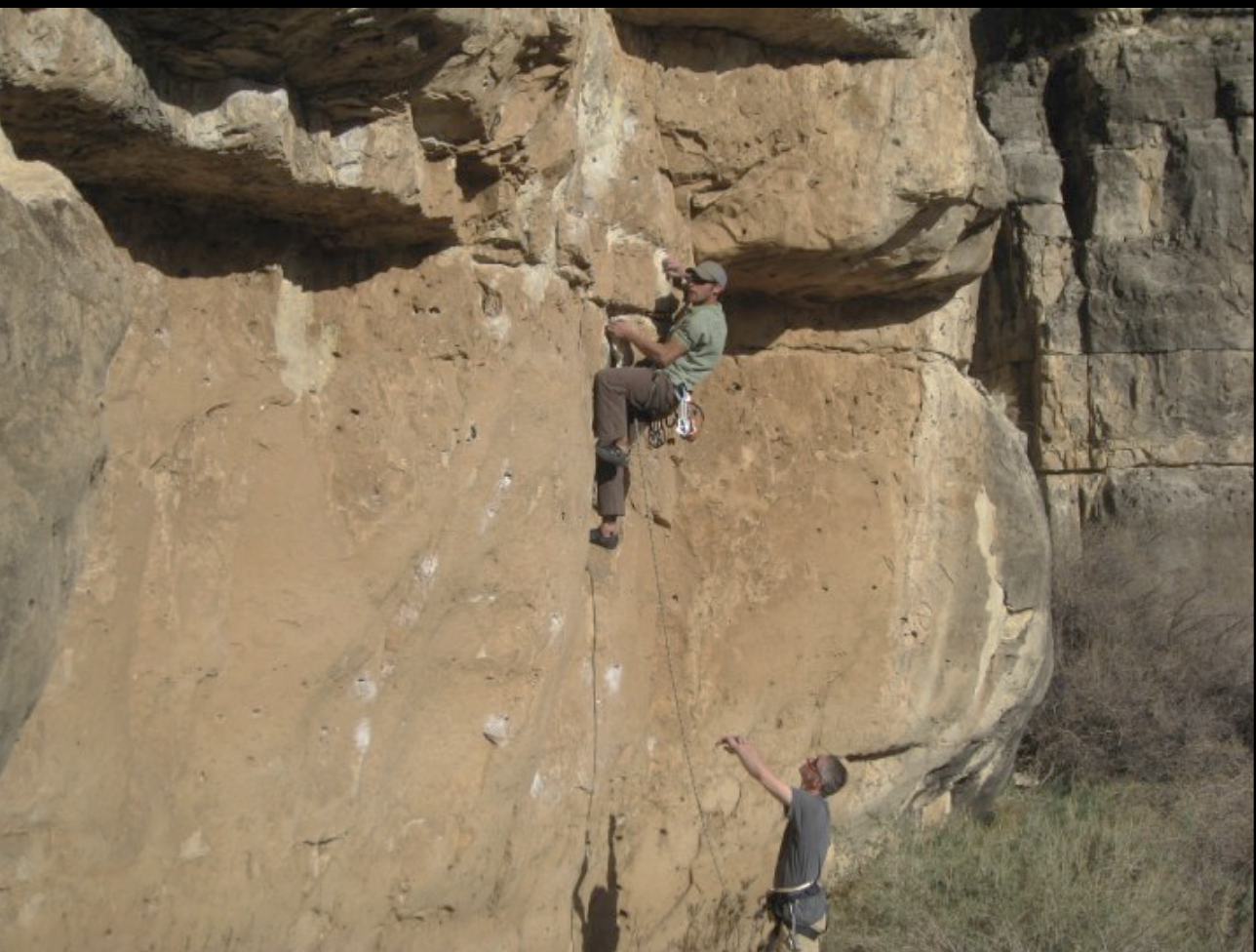
I started rock climbing when I was thirteen. By fourteen, I was working at a climbing gym. Eventually, I spent five years guiding, helping people confront their fears, learn to trust one another, and discover what they were genuinely capable of doing.
One of the things I love about climbing is its honesty. We can tell ourselves all sorts of things about our abilities, but on the wall, we either make the move or we don't. Gravity is under no obligation to care about our hopes and dreams.
And yet, falling is hardly the end of the story. It's often where the interesting part begins.
Climbing shaped my friendships, my body, and the way I understood difficult things. But guiding was seasonal, and something I loved doing for myself had gradually become something I did for everyone else.
Eventually, I stopped guiding. I didn't stop climbing.
These days, when the world seems particularly determined not to make sense, I can walk into a climbing gym and find something that does.
The familiar smell of chalk and sweat. The ritual of bending my climbing shoes to warm the rubber, stretching my forearms, hanging for a while, and moving through easy problems that feel almost as natural as walking.
Then come the difficult ones.
I fall. Again and again. But there's remarkably little frustration. Instead, curiosity takes over. What if I move my foot a little higher? Turn my hip? Trust that tiny hold? What am I missing?
And occasionally, something clicks.
One of my favorite feelings in the world is noticing myself getting better at something difficult. A movement that once seemed impossible suddenly makes sense. The holds haven't changed. Something in me has.
It's a peculiar kind of satisfaction. The problem hasn't necessarily become easier. I've become more capable of solving it.
And once you've experienced that feeling, it's difficult not to want more.
Of course, climbing is, in many ways, a ridiculous endeavor. I spend hours trying to get from one collection of plastic holds to another, often falling repeatedly in the process. I'm not saving lives or advancing civilization. As George Mallory famously explained his desire to climb Everest, "Because it's there."
And sometimes that's enough.
Today, I'm an engineering teacher. What I loved about guiding—watching someone discover a capability they didn't know they possessed—has found an entirely different expression in my classroom.
I couldn't have imagined that life at thirteen.
Cal Newport, in So Good They Can't Ignore You, offers a liberating argument: Rather than searching for our passion, perhaps we should develop competence and see what happens.
I think he's onto something.
We don't necessarily become good at things because we're passionate about them. Sometimes we become passionate because we've experienced the extraordinary satisfaction of getting better. What was once overwhelming becomes understandable. What seemed impossible becomes merely complicated. And what was once complicated becomes something we can begin to play with.
A passion with calluses on its hands.
And that passion doesn't have to become a profession. It doesn't have to pay the bills, impress anyone, or justify the thousands of hours we've devoted to it. Some things are worth doing simply because we love doing them.
Perhaps that's what makes the advice to follow our passion so peculiar. It asks us to begin with something that may only emerge through experience. It assumes that we ought to know what we'll love before we've had the opportunity to discover what we're capable of.
There is no one thing we were born to do. No predetermined destination, no finished version of ourselves waiting to be discovered.
Perhaps the great work of a life isn't finding who we were always meant to be.
It's to keep becoming.