Jordan Kivitz
Illustration of a mechatronics workbench and rover. Scroll to explore

Resources for educators

Guides and course materials I’ve made for my classes and share with other educators.

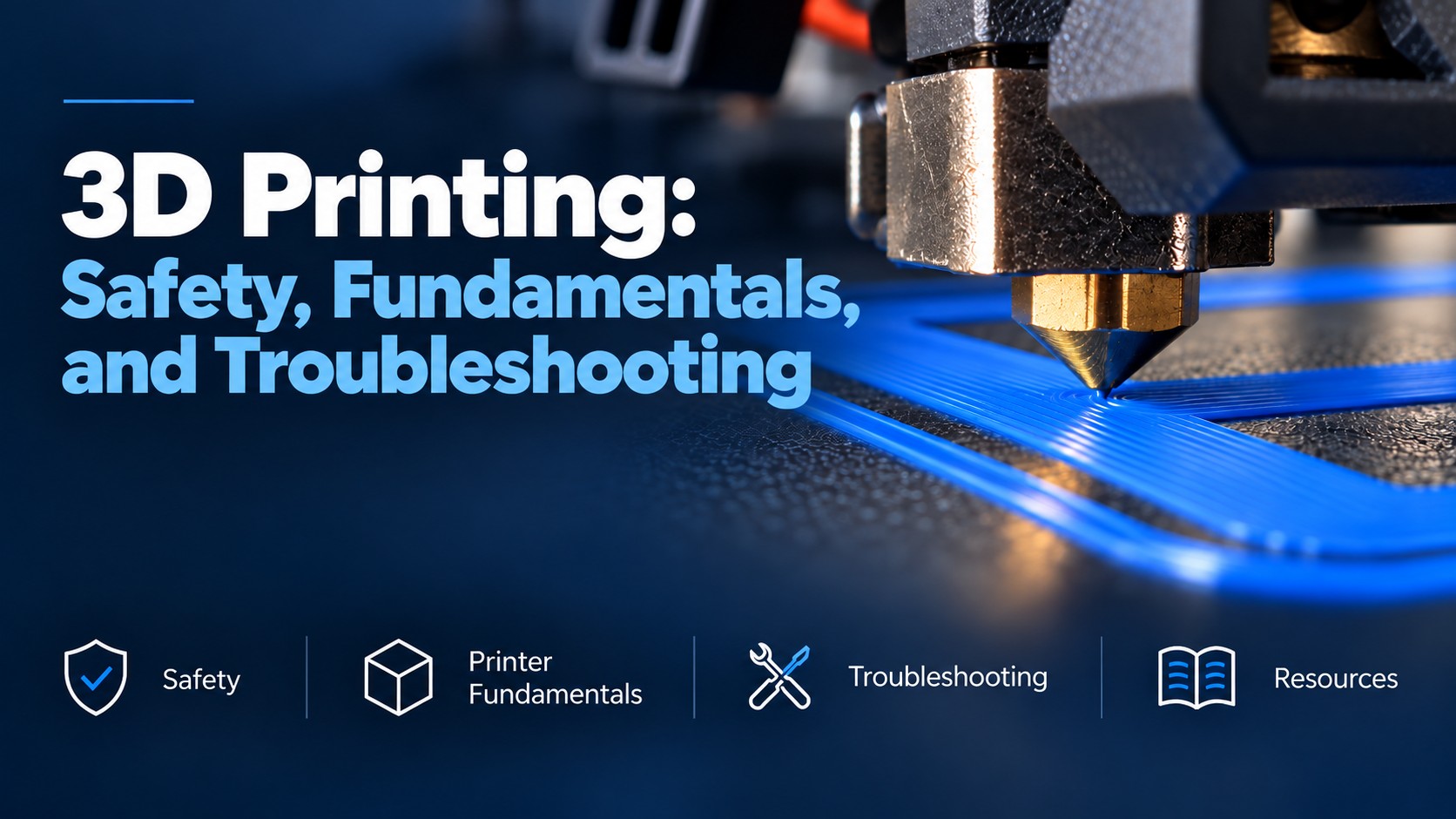
Close-up of a 3D printer laying down blue filament.

01 · Additive manufacturing

3D Printing: Safety, Fundamentals, and Troubleshooting

A guide to printer safety, core 3D-printing concepts, print preparation, and diagnosing common print problems.

PDF 8.3 MB

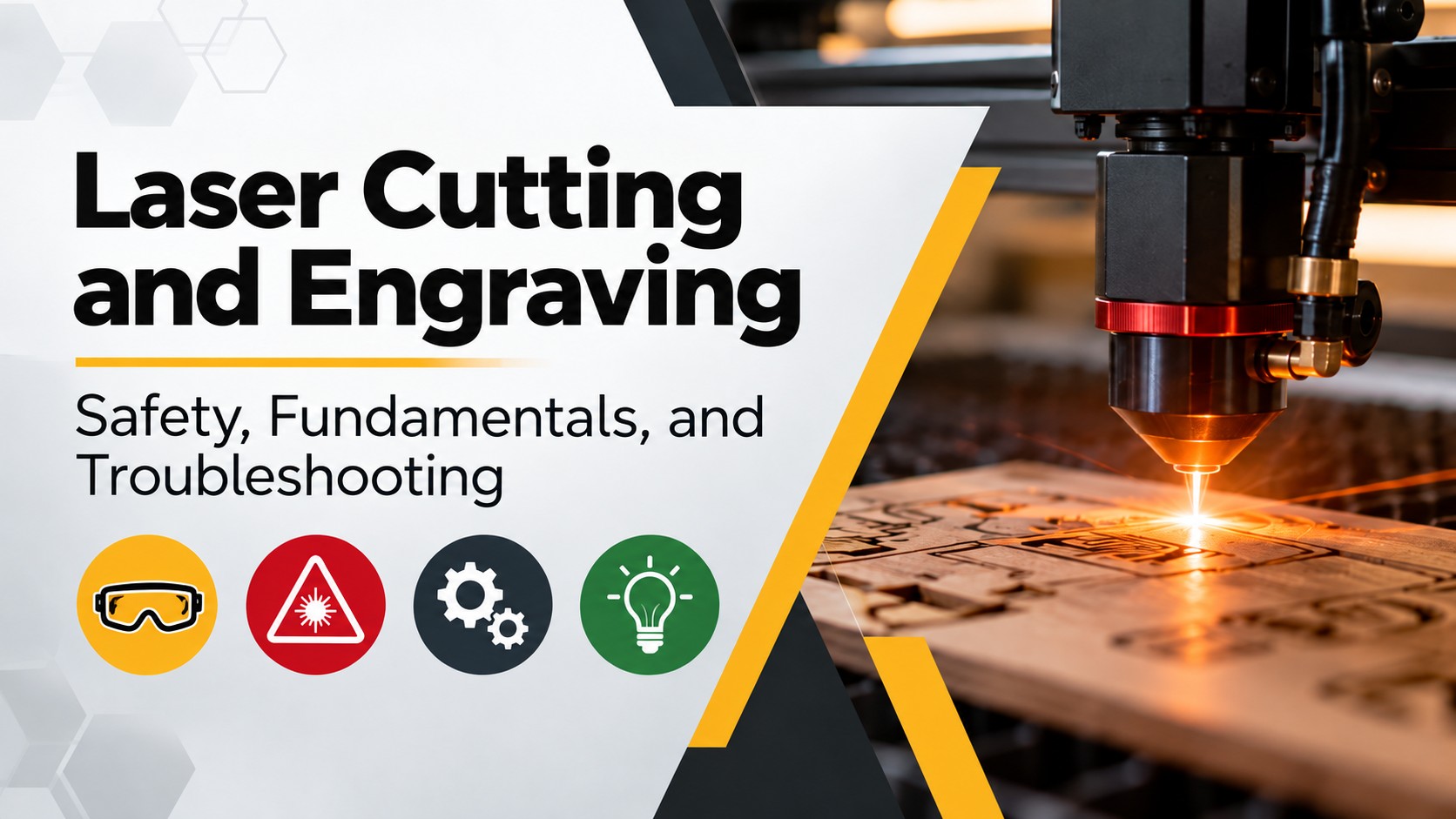
A laser engraving machine etching a wooden piece.

02 · Laser cutting and engraving

Laser Cutting and Engraving: Safety, Fundamentals, Troubleshooting

A walkthrough of design-file preparation, laser software setup, calibration, testing, and iteration.

PDF 12.1 MB

Course frameworks

For Grace Hopper Center, I developed these frameworks from scratch and aligned them with required Virginia Department of Education (VDOE) competencies.

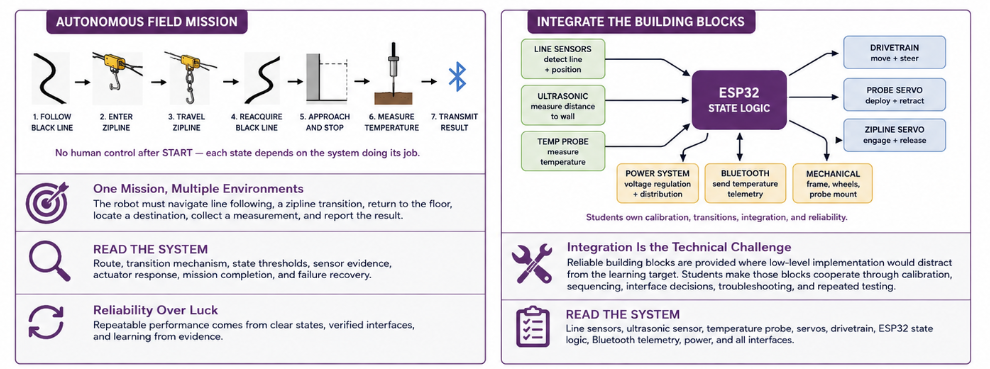
A system map connecting line, ultrasonic, and temperature sensors to ESP32 control, drivetrain and servos, with power, communication, and mechanical components.
From the Mechatronics I frameworkView full diagram ↗

01 · VDOE course 8554

Mechatronics I Course Framework

A 36-week plan for grades 10–12 that builds electronics, programming, fabrication, sensing, and control into integrated systems and student-directed work.

2026–2027 PDF and DOCX

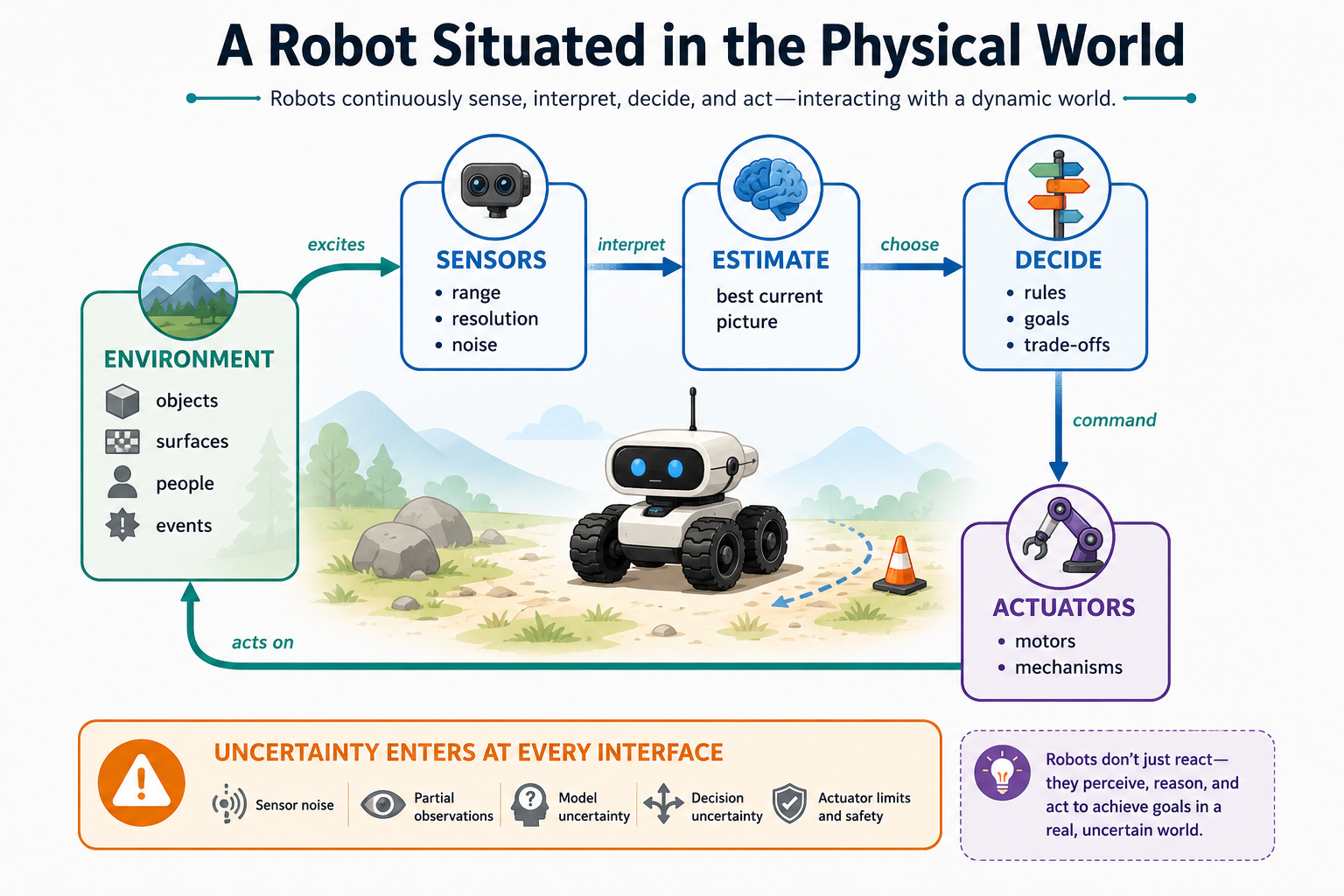
A robot senses its environment, estimates, decides, and acts; uncertainty can enter through sensors, incomplete observations, models, decisions, and actuator limits.
From the Robotic Design frameworkView full diagram ↗

02 · VDOE course 8421

Technology of Robotic Design Course Framework

A 36-week course organized around sensing, control, system integration, and managing uncertainty in the physical world.

2026–2027 PDF and DOCX

TCHIP and PhET curriculum

The NSF-supported TCHIP fellowship aims to bring semiconductor technology to the forefront of physical science and engineering classrooms. I created these materials with Northern Virginia Community College and PhET at CU Boulder as part of that work. Meet the fellows ↗

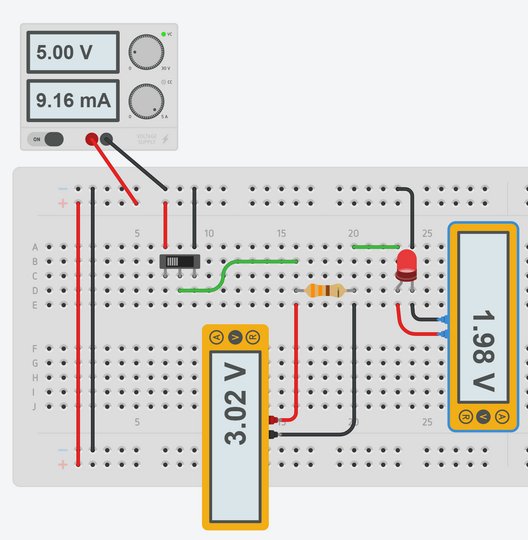
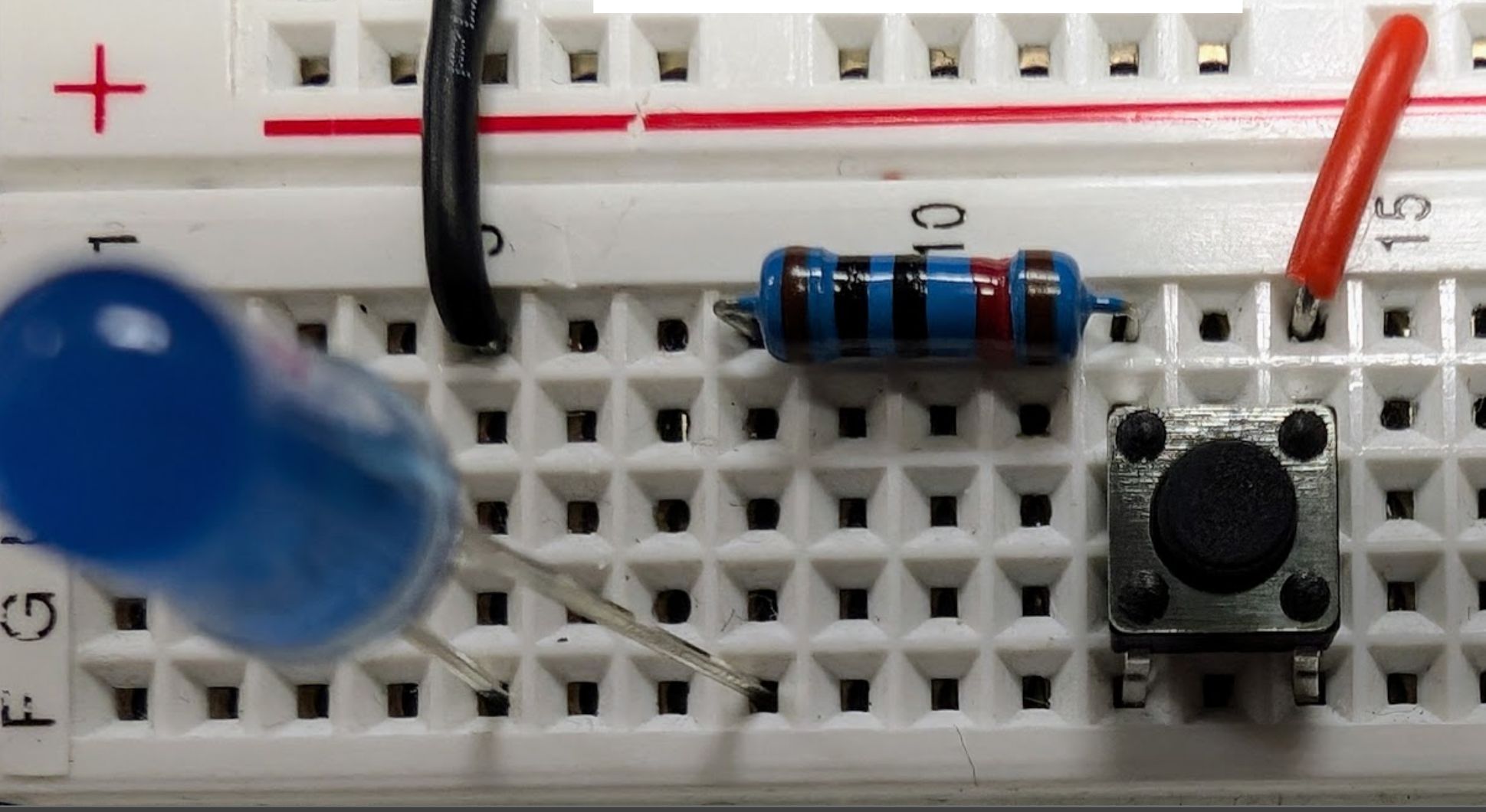
Simulated breadboard circuit from the semiconductor unit, with voltage and current readings.
From my Semiconductor Foundations unit plan

01 · TCHIP Master Teacher Fellow

Semiconductor Foundations Through Diodes and Transistors

A three-lesson unit begins with circuit behavior students can measure, then uses that evidence to build a model of the P–N junction. It connects physical science, technical documentation, and semiconductor manufacturing.

Phase 1 unit plan PDF 40 pages

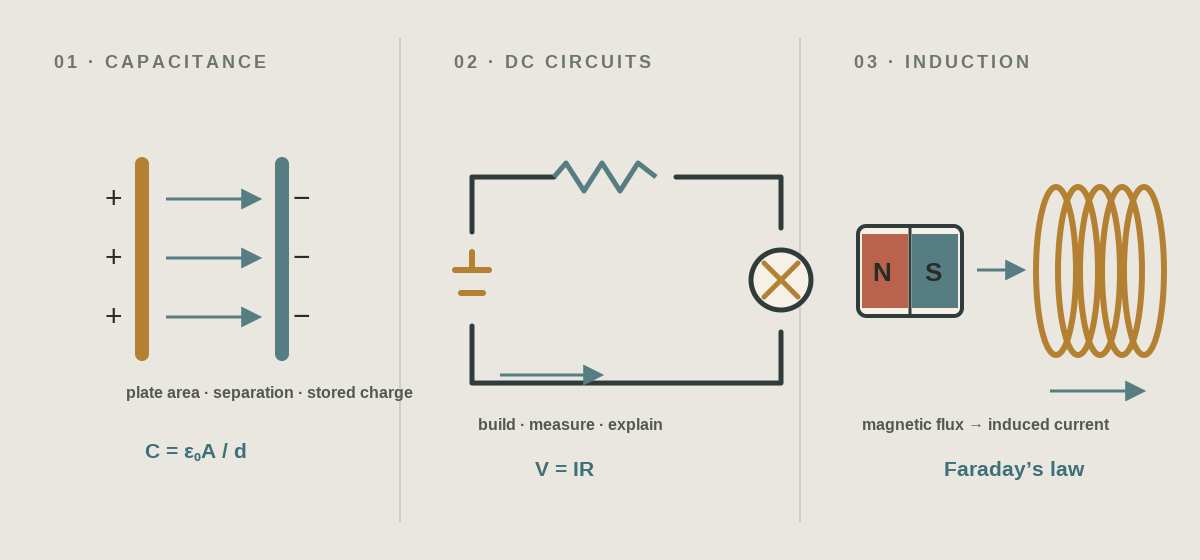
Illustration of the portfolio's sequence: capacitance, DC circuits, and electromagnetic induction.
The portfolio moves from capacitors to circuits to induction

02 · PhET · Electricity and magnetism

E&M Simulation Portfolio for Mechatronics

A full-semester plan linking capacitor behavior, DC circuits, and electromagnetism to the sensors, actuators, motor control, and physical builds found in mechatronics.

Spring 2026 PDF 22 pages

Video walkthroughs

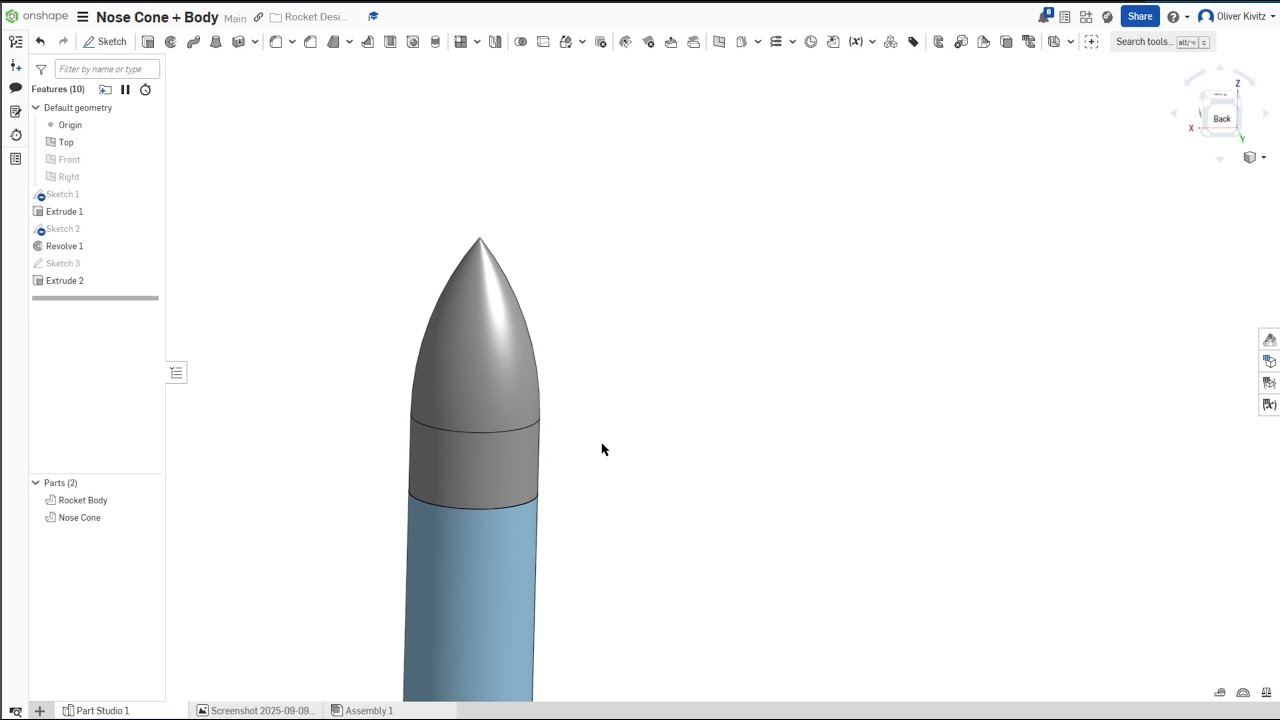
YouTube thumbnail for Creating Rocket Nose Cone and Body within Onshape.

Onshape walkthrough · 30:08

Creating Rocket Nose Cone and Body within Onshape

YouTube video

Projects

A space for exemplary student work and the ideas, testing, and revisions behind each design.

Explore student work
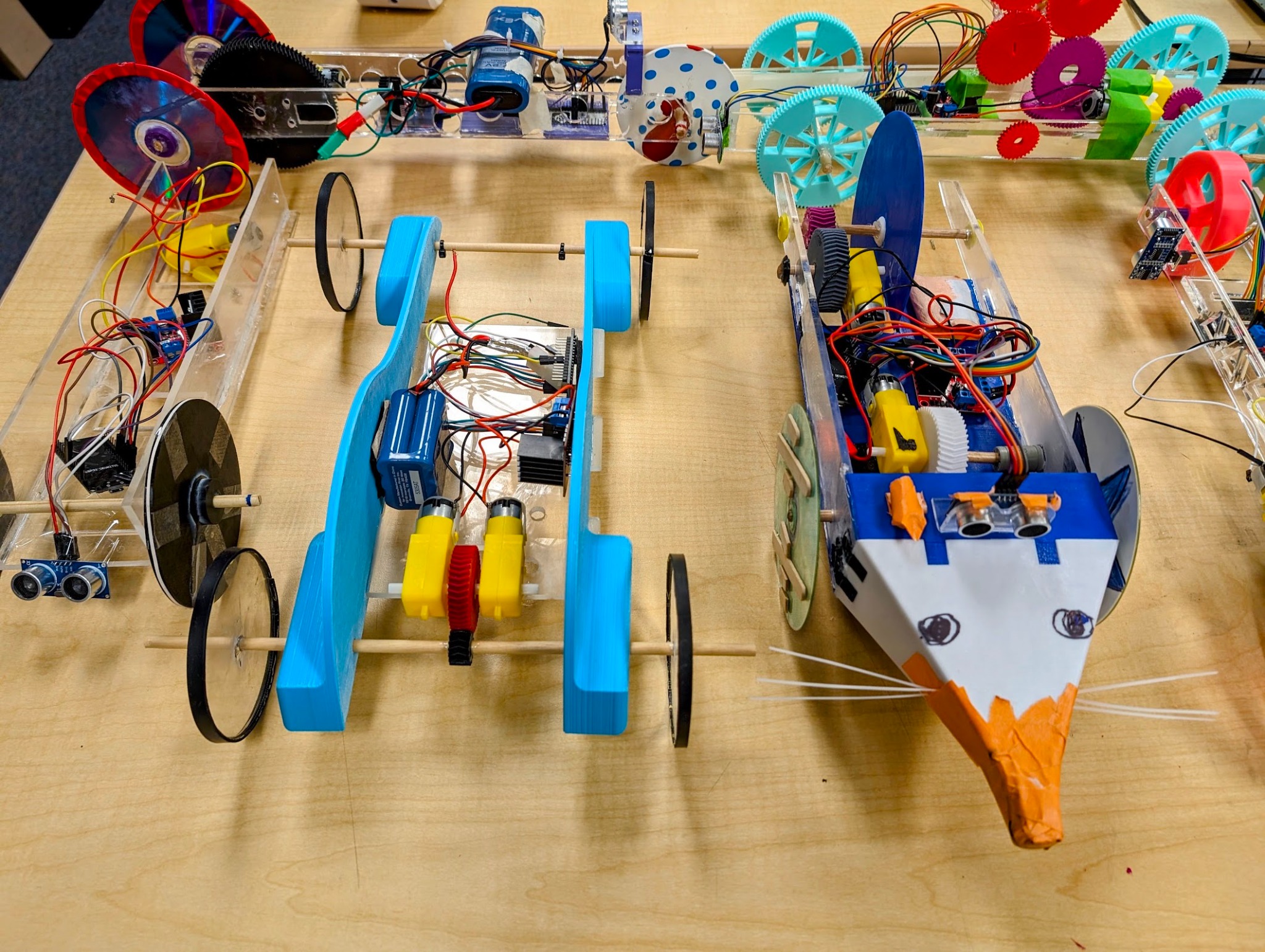
Robotic vehicle prototypes arranged on a workbench.

Jordan Kivitz

Jordan Kivitz in the fabrication lab.

I am an engineering teacher at Arlington Tech, a Governor’s STEM Academy within Arlington Public Schools, where I teach engineering design, mechatronics, and robotics. I studied Integrative Learning and Adventure Education at Prescott College and later received a fellowship at NASA’s Goddard Space Flight Center. As an NSF-supported TCHIP fellow, I collaborate with PhET and industry partners to bring semiconductor physics and technology into classrooms. My background in wilderness and adventure education continues to shape how I teach: helping students develop technical competence, independence, and the ability to solve difficult problems in teams. Whether in the wilderness or the engineering lab, I believe the obstacle is the way, and that we become more capable through the experience of working through uncertainty.

Email JordanKivitz@gmail.com LinkedIn View my profile YouTube Visit my channel
Grace Hopper Center 800 S. Walter Reed Drive
Arlington, VA 22204
Fab Lab, Room 115