Odes from the Fab Lab
Ode to the Waterjet
In praise of false advertising and extraordinary results.
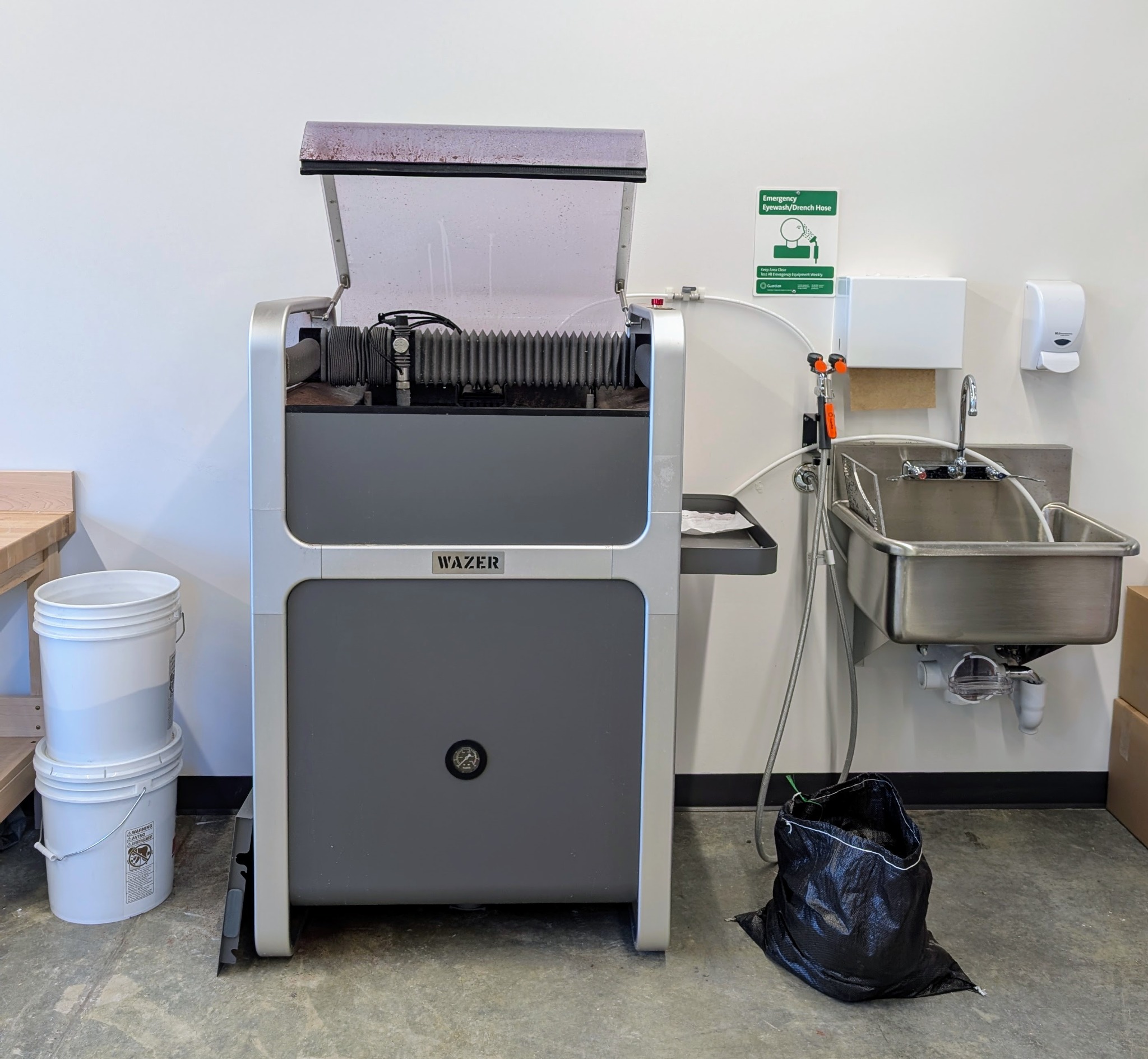
The waterjet is a liar.
Not a malicious liar. Not a particularly sophisticated one. But a liar nonetheless.
It claims to cut metal with water.
Water! The stuff we drink. The stuff that falls from the sky, leaks through ceiling tiles, and struggles to remove dried spaghetti from a dinner plate.
And here is a machine that supposedly uses it to slice through aluminum. Glass. Tile. Steel.
Steel! Our CNC machine can't even cut steel.
Naturally, I was impressed. The possibilities!
After all, water carved the Grand Canyon. Give it enough time and it can move mountains. Surely a quarter-inch sheet of aluminum would be no trouble.
Then I discovered the truth.
The garnet does the cutting.
Garnet, for the uninitiated, is a mineral more commonly associated with jewelry than industrial violence. January's birthstone. A pleasant little gemstone with a glassy luster, a respectable hardness of 6.5 to 7.5 on the Mohs scale, and a tendency to grow into exquisite twelve- or twenty-four-faced crystals.
A mineral with aspirations, clearly.
It also has no cleavage. No convenient planes along which to split. Crush it, and instead of politely falling apart along predetermined lines, it fractures into sharp, irregular fragments. A rather useful quality if your ambition is to destroy things.
Which, apparently, is garnet's other career.
Crush it into millions of tiny particles, accelerate them in a high-pressure stream of water, and they will cheerfully eat their way through cast iron.
So the waterjet is, in fact, a sandblaster with excellent aim.
The water is indispensable, of course. It supplies the energy, accelerates the abrasive, and focuses the whole savage enterprise into a narrow, destructive stream. But it is the garnet that does the grinding. The water gets the headline. The garnet does the work.
A familiar arrangement.
Our WAZER sits in the fabrication lab, looking rather pleased with itself. It costs more than the first cars many of our students dream of owning. And while it won't take them anywhere, it can take their ideas to places they never imagined.
But first, the rituals.
The sludge bins must be emptied of their accumulated geological remains. The water level must be just right. The nozzle must be homed, the garnet hopper fed, the water valve opened, and the drain hose positioned unobstructed in the sink, lest our magnificent machine decide to turn the fabrication lab into a wetland.
Six humble acts of preparation before the great industrial spectacle can begin. Forget one, and the WAZER will remind you, usually with the patience and subtlety of a fire alarm.
Only then can students draw intricate shapes on computers, secure a sheet of aluminum inside, and close the lid. The machine roars to life, and almost immediately the view disappears behind a swirling tempest of water droplets, garnet, and pulverized metal. Through the murky window, shapes emerge and vanish in the turbulence. It's like watching a planet being formed: a violent, primordial spectacle of water, minerals, and chaos, from which, against all reasonable expectations, a precision-engineered part eventually emerges.
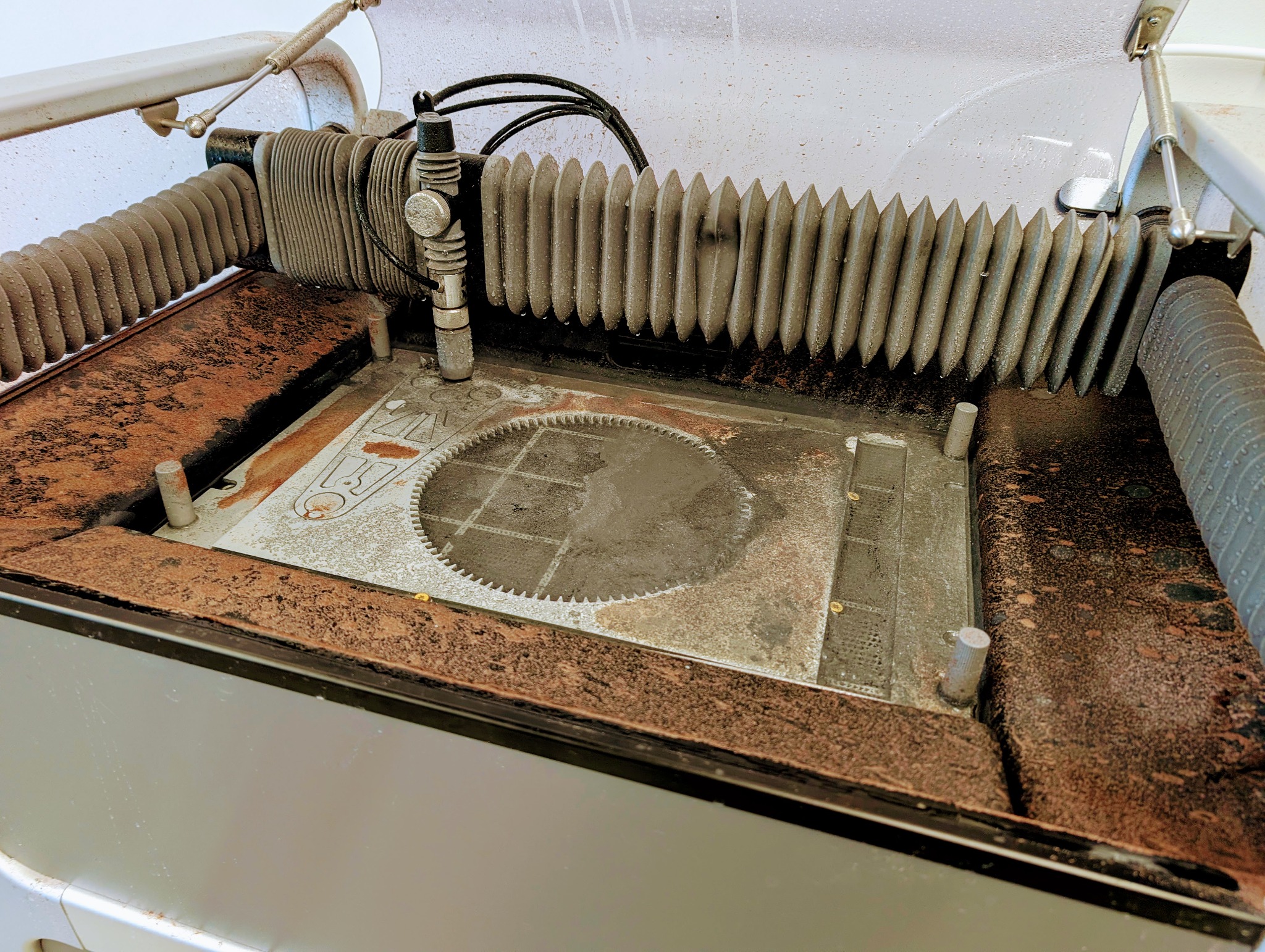
It is genuinely astonishing.
It is also an extraordinarily complicated way to make expensive mud.
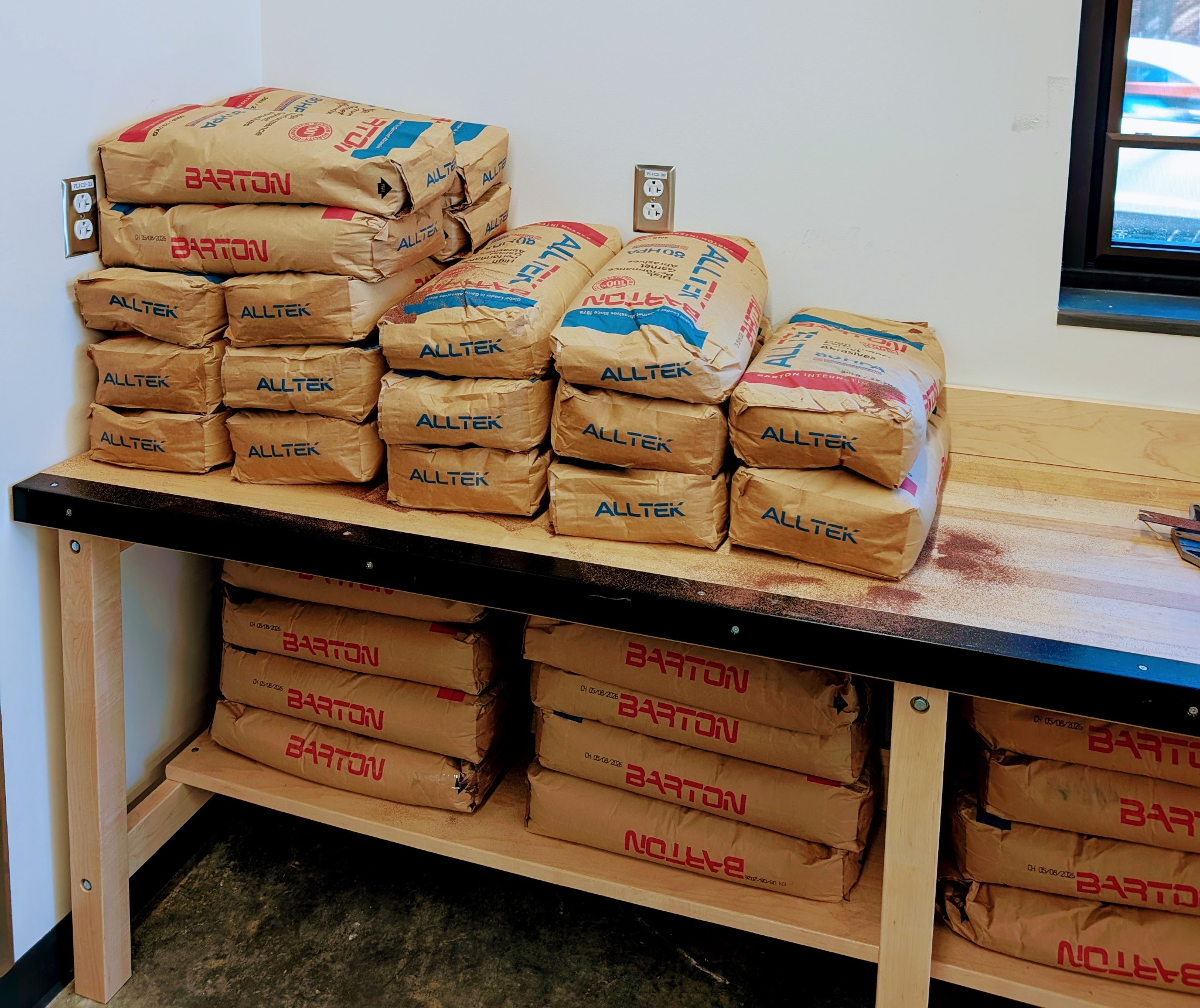
The garnet arrives clean and dry in fifty-pound bags with all the structural integrity of a Ziploc. It escapes through the seams, spills across the floor, and insinuates itself into every available crevice, as though liberation were its natural state. And who can blame it? A mineral of such magnificent hardness was never meant to spend eternity dangling from an earlobe. No, garnet has grander ambitions. It was born to pulverize steel.
The machine devours it with enthusiasm, and the spent abrasive settles into the depths below. Not waste, exactly, but the remains of a life well lived. Like autumn leaves returning to the earth, each tiny grain has fulfilled its purpose, surrendered its sharp edges, and come to rest in a great geological compost heap.
The circle of life. With plumbing.
Neglect the cleanup, however, and the bottom of the machine becomes an otherworldly bog. A primordial soup. One half expects something with gills to emerge.
Such is the price of precision.
And what precision! Watch a student lift a freshly cut part from the machine. Thirty minutes ago, it was a collection of lines on a screen. Now it has mass. Sharp edges. The cold authority of metal.
Perhaps it's a robot bracket. A structural plate. A gear. Some peculiar mechanism that has not quite been invented yet.
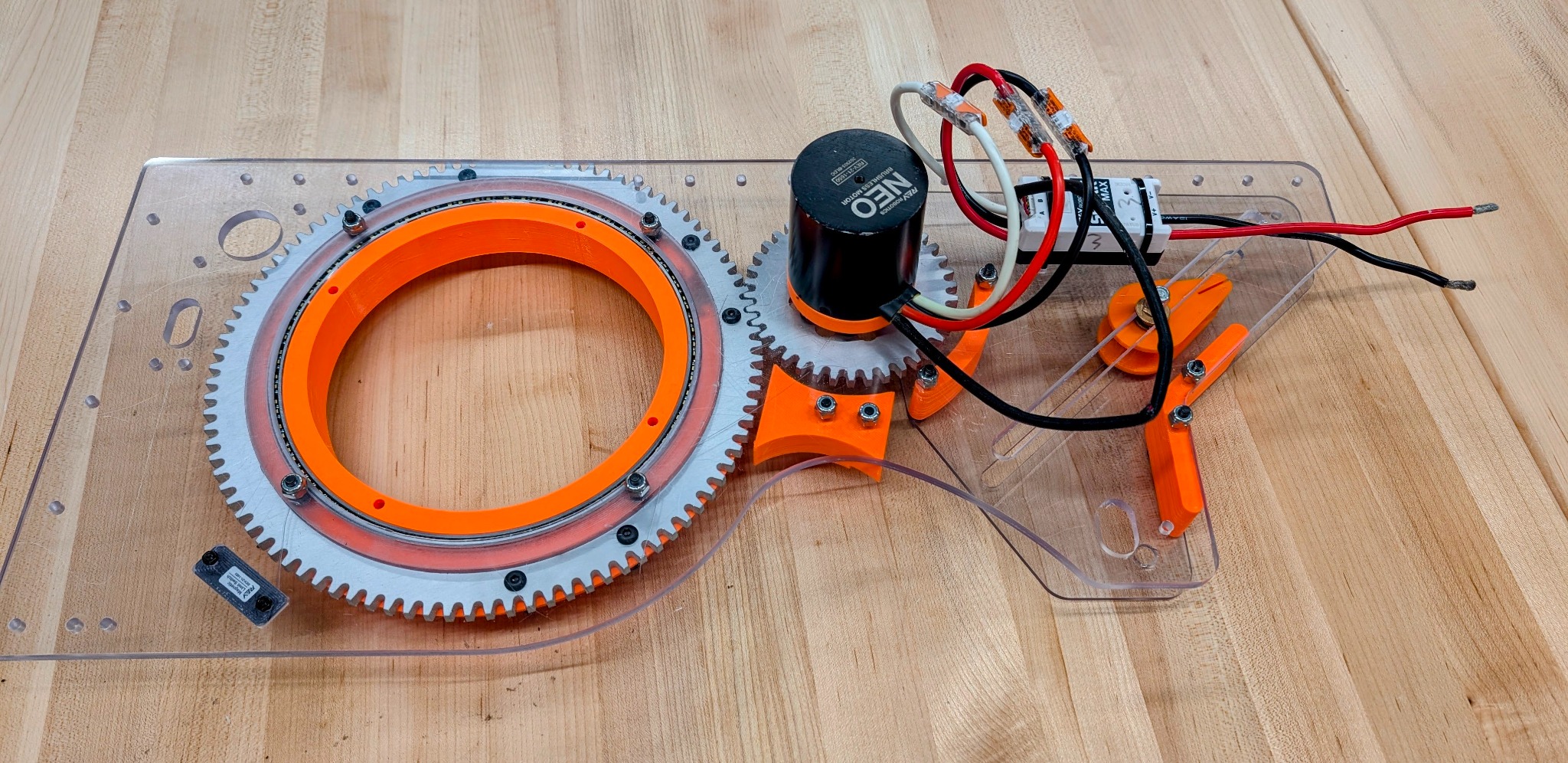
The student holds it against the assembly.
Sometimes it fits.
Sometimes a hole is two millimeters off, and a magnificent digital design becomes a small, expensive reminder that the universe is under no obligation to accommodate our intentions.
The WAZER offers no sympathy. It does not care how long the drawing took, how confident its creator felt, or how badly the robotics team needs the part before Saturday's competition.
It merely cuts what it has been told to cut.
Which may be the most honest thing about it.
There is something deeply satisfying about a machine that transforms ideas into objects while remaining completely indifferent to whether those ideas are any good. It gives students what they need, though not always what they want: an encounter with reality.
And then there is the wonderful absurdity of the whole arrangement. Water and crushed gemstones. Two substances that have spent much of human history decorating rivers and jewelry boxes, now conspiring under tremendous pressure to carve their way through some of the toughest materials we possess.
No magic. No mysterious futuristic substance. Just physics, geology, and a remarkable amount of plumbing.
Perhaps the name isn't entirely dishonest after all.
Still, I propose a rebranding.
The High-Pressure Garnet Delivery System.
Accurate. Unromantic. Almost certainly impossible to sell.
Long live the waterjet.
The most magnificent mess in the fabrication lab.